

Desiree was the last to arrive at dinner. She had spent several minutes sitting in her car, trying to convince herself to go inside.
Elle would be there, and they had barely spoken since the Professional Code of Conduct incident. Irene would be there too.
Her UC’s quiet disappointment afterward had somehow felt worse than being yelled at.
Eventually, Desiree took a breath, got out of the car, and joined the group.


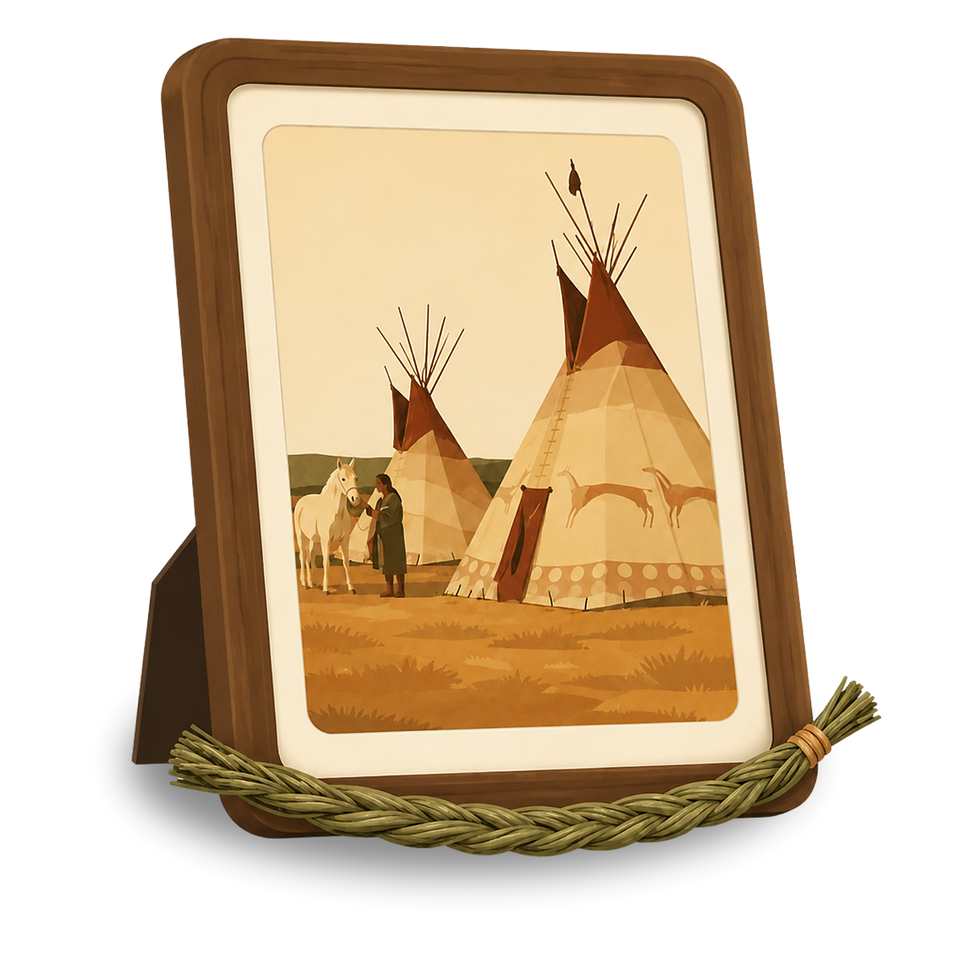
When Desiree entered, Katelyn was describing the Culture Celebration Days she had organized during practicum. Her students had explored Inuit culture through stories, games, and food, and the experience had changed how she thought about teaching.
"You do these kids justice and understand as much as you can about the culture," she explained.
Carlos immediately asked for her bannock recipe, and soon an email list was being passed around on a napkin.
Carlos shared next. His school had taken on a week-long, school-wide theatre project focused on Indigenous topics, giving students opportunities to connect unfamiliar histories and perspectives to their own experiences.
Around the table, the response was enthusiastic. Each story seemed to lead naturally into another.

When it was Elle’s turn, her experience was different. She admitted that integrating Indigenous perspectives had taken a backseat during her practicum.
“I just don’t know enough about it,” she said.
Growing up, Indigenous perspectives had rarely been present in her own schooling, and she was uncomfortable teaching something she didn’t yet understand.
Mariko reassured her that uncertainty was part of the learning process. What mattered was making respectful attempts, reflecting on what worked, and continuing to learn. The conversation shifted toward their university preparation.
Some felt their coursework had only scratched the surface, while others had been introduced to resources they could draw upon once they entered the classroom.


Adeline described building a shared bank of Indigenous resources during university coursework, something she later relied on during practicum.
Sandeep’s experience had been more dependent on the people around her. Her teacher associate helped her navigate unfamiliar terminology and decide which resources were culturally appropriate for students to use.
Still, Sandeep noticed a larger problem: resources might exist in a school, but teachers did not always know what to do with them. Books could be placed on a shelf or an activity could be offered, but meaningful integration required more than simply having the materials.
As the group talked, a common theme emerged.
No one person had all the answers. Their learning came from coursework, mentor teachers, consultants, librarians, community members, and now, from one another.
Then Irene turned toward Desiree.
“I think Desiree had a slightly different experience with the liaison,” she said gently.
“Care to share?”
Hearing her name startled Desiree, but she began explaining. Like several others, she had felt underprepared by her university coursework and had done much of the learning herself. When questions arose during practicum, she approached her principal for help.
That decision opened a door.
Through the school’s liaison, Desiree connected with Elders who helped her better understand the experience of an indigenous student in her classroom.
“I got to meet Elders and hear their stories,” she told the group, “and there is nothing that compares to that.”


Desiree explained that she had not yet been able to invite the Elders into her classroom, but she had made connections she hoped to carry into her next practicum.
Only minutes earlier, she had been sitting outside wondering whether she wanted to face this group at all. Now, her own experience had become part of their shared learning. Across the table, Irene gave her a small, approving nod.
Desiree felt something shift. Their earlier tension had not disappeared, and neither had all the uncertainty surrounding how to thoughtfully integrate Indigenous perspectives into teaching. But in a conversation built around honesty, shared resources, questions, and experience, everyone had something to contribute.
And for Desiree, it felt as though something between her and Irene might have been mended.

1
What does reconciliation mean in the context of mentorship?
How has the relationship between Desiree and Irene evolved throughout the practicum?
2
How does hearing multiple perspectives enrich professional learning?
3
4
Many of the student teachers described uncertainty when integrating FNMI perspectives. How can mentors encourage thoughtful risk-taking while maintaining respectful practice?
5
What does Mariko mean when she says, "It's the attempt that's important"? Is the attempt adequate when demonstration of competence is required to satisfy the requirements of the practicum?
Reflection Questions
Reflection Questions
1
2
What does reconciliation mean in the context of mentorship?
3
How has the relationship between Desiree and Irene evolved throughout the practicum?
4
Many of the student teachers described uncertainty when integrating FNMI perspectives. How can mentors encourage thoughtful risk-taking while maintaining respectful practice?
How does hearing multiple perspectives enrich professional learning?
5
What does Mariko mean when she says, "It's the attempt that's important"? Is the attempt adequate when demonstration of competence is required to satisfy the requirements of the practicum?